
.png)

.png)
.png)
.png)
.png)
.png)
.png)
.png)

Alanine Aminotransferase (ALT)
Alanine aminotransferase (ALT) is an enzyme kept mainly inside liver cells (hepatocytes). Smaller amounts exist in the kidneys, heart, and skeletal muscle. An ALT blood test measures how much of this normally inside-the-cell enzyme is found in the bloodstream. Available at 2,000+ lab locations and at-home (select states). See FAQs below
Albumin
Albumin blood testing measures albumin, the main protein in the liquid part of your blood. Albumin is made by the liver (hepatocytes) and released into the bloodstream (plasma). It is a compact, globular carrier protein (serum albumin) that circulates widely through blood and tissues. Available at 2,000+ lab locations and at-home (select states). See FAQs below
Albumin/Globulin Ratio
The albumin/globulin ratio (A/G ratio) is a calculated index from a standard blood protein panel. It compares albumin—the dominant plasma protein made by the liver—to the combined globulins, a broad family of proteins that includes transport proteins and antibodies. Albumin is synthesized by hepatocytes, while alpha and beta globulins are mainly liver-derived and gamma globulins (immunoglobulins) are produced by plasma cells. Available at 2,000+ lab locations and at-home (select states). See FAQs below
Alkaline Phosphatase (ALP)
Alkaline Phosphatase (ALP) blood testing measures the amount of ALP, a surface enzyme attached to cell membranes throughout the body. Most circulating ALP comes from the liver and bile ducts (hepatocytes and cholangiocytes) and from bone-forming cells (osteoblasts). Smaller contributions can come from the intestine, kidney, and—in pregnancy—the placenta. Available at 2,000+ lab locations and at-home (select states). See FAQs below
Aspartate Aminotransferase (AST)
Aspartate aminotransferase (AST) is a naturally occurring enzyme inside many tissues, most abundantly the liver, but also the heart, skeletal muscle, kidneys, brain, and red blood cells. It resides in both the watery part of the cell and its energy factories (cytosol and mitochondria). Available at 2,000+ lab locations and at-home (select states). See FAQs below
Direct Bilirubin
Bilirubin, Direct (blood testing) measures the fraction of bilirubin that has been processed by the liver and made water‑soluble. Bilirubin itself is a yellow pigment created as the body breaks down old red blood cells. Macrophages convert heme from hemoglobin into bilirubin (unconjugated, indirect), which is carried to the liver bound to albumin. Available at 2,000+ lab locations and at-home (select states). See FAQs below
Indirect Bilirubin
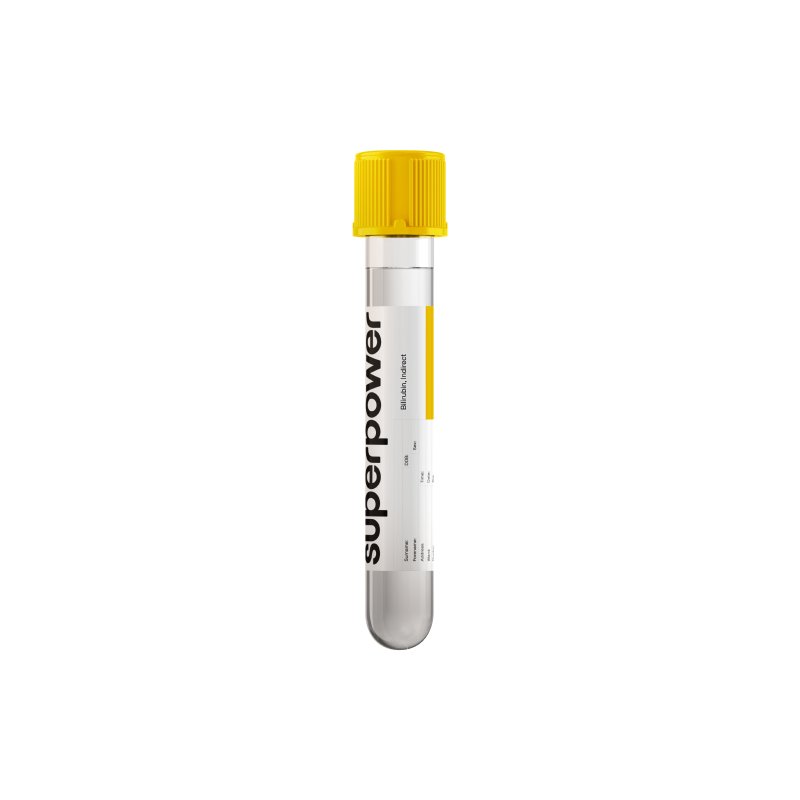
Indirect bilirubin is the form of bilirubin circulating before the liver modifies it. Bilirubin is a yellow pigment created when old red blood cells are dismantled; hemoglobin’s heme ring is opened to biliverdin, then reduced to bilirubin (unconjugated bilirubin). This fat‑soluble molecule leaves the spleen and other tissues attached to albumin and travels in the bloodstream to the liver. Available at 2,000+ lab locations and at-home (select states). See FAQs below
Bilirubin-to-Albumin Ratio (BAR)
The Bilirubin-to-Albumin Ratio (BAR) is a calculated number that compares the amount of the yellow pigment made when red blood cells are broken down (bilirubin) with the amount of the main carrier protein in blood (albumin). Bilirubin is produced from heme in the spleen and other tissues, released into the bloodstream in an unconjugated form, and carried to the liver while bound to albumin. Available at 2,000+ lab locations and at-home (select states). See FAQs below
Total Bilirubin
Bilirubin is a yellow pigment made when the body recycles worn‑out red blood cells. Macrophages in the spleen and liver break down hemoglobin’s heme into biliverdin and then bilirubin. This first form, called unconjugated bilirubin (indirect bilirubin), is not water‑soluble and travels in the bloodstream bound to albumin. Available at 2,000+ lab locations and at-home (select states). See FAQs below
De Ritis (AST / ALT) Ratio
The De Ritis ratio is the proportion of two liver-related enzymes measured in blood: aspartate aminotransferase (AST) and alanine aminotransferase (ALT). These enzymes are catalysts in amino acid metabolism (transaminases). ALT is concentrated in liver cells (hepatocytes) and mainly resides in the cell fluid (cytosol). Available at 2,000+ lab locations and at-home (select states). See FAQs below
Gamma-Glutamyl Transferase (GGT)
Gamma-glutamyl transferase (GGT) is a membrane-bound enzyme found on the outer surface of many cells, especially in the liver and bile ducts. It is produced by liver cells and bile duct lining cells, with smaller amounts in kidney, pancreas, and intestine. Available at 2,000+ lab locations and at-home (select states). See FAQs below
GGT / ALT
GGT / ALT blood testing measures two liver enzymes that normally live inside liver tissue. GGT (gamma‑glutamyl transferase) is a membrane‑bound enzyme concentrated in cells lining the bile ducts, with smaller amounts in the liver, pancreas, and kidneys. ALT (alanine aminotransferase) sits inside liver cells (hepatocytes) in the cytosol. Available at 2,000+ lab locations and at-home (select states). See FAQs below
GGT-to-HDL Cholesterol Ratio (GGT / HDL-C)
The GGT-to-HDL Cholesterol ratio is a calculation based on two routine blood components: an enzyme mainly from the liver (gamma-glutamyl transferase, GGT) and the cholesterol carried by “good” high-density lipoproteins (HDL-C). GGT sits on the outer surface of liver and bile duct cells and helps recycle the body’s master antioxidant, glutathione. Available at 2,000+ lab locations and at-home (select states). See FAQs below
Globulin
Globulin, in blood testing, is the combined family of non‑albumin proteins circulating in your blood. These proteins come primarily from your liver and immune system (hepatocytes and plasma cells). They are often discussed as groups—alpha, beta, and gamma globulins—based on their physical behavior and functions. Available at 2,000+ lab locations and at-home (select states). See FAQs below
Indirect-to-Direct Bilirubin Ratio (I/D Bilirubin Ratio)
The Indirect-to-Direct Bilirubin Ratio compares the two circulating forms of bilirubin—indirect and direct—in your blood. Bilirubin is a pigment made when the body breaks down heme from aging red blood cells. The first form, indirect bilirubin (unconjugated), is fat-soluble and rides to the liver bound to albumin. Available at 2,000+ lab locations and at-home (select states). See FAQs below



.svg)



.avif)