Excellent 4.6 out of 5
Renal and Electrolyte Disorders

Blood Testing for Osteomalacia

Blood testing is essential to detect osteomalacia, revealing impaired bone mineralization and related metabolic stress. At Superpower, we test Vitamin D, Calcium, and ALP (alkaline phosphatase). We offer in‑clinic and at‑home options; home testing for osteomalacia is currently available in selected states. (See FAQs below for more info).

Book an Osteomalacia blood test today.
Cancel anytime
HSA/FSA eligible
Results in a week
Physician reviewed

Every result is checked

·
CLIA-certified labs

Federal standard for testing

·
HIPAA compliant

Your data is 100% secure

Key Benefits

  • Confirm or rule out osteomalacia by assessing vitamin D, calcium, and ALP.
  • Spot vitamin D deficiency driving poor bone mineralization, pain, and muscle weakness.
  • Flag raised ALP indicating increased bone turnover consistent with osteomalacia.
  • Clarify low-normal calcium patterns typical in vitamin D-related osteomalacia.
  • Guide safe vitamin D and calcium supplementation to restore mineralization and relieve symptoms.
  • Protect fertility and pregnancy by correcting deficiencies that affect bone and fetal health.
  • Track recovery as vitamin D normalizes, calcium stabilizes, and ALP trends down.
  • Best interpreted with phosphate, PTH, and your symptoms for a complete picture.

What are Osteomalacia biomarkers?

Osteomalacia biomarkers are blood signals that map how well your skeleton is mineralizing. They track the supply lines (calcium and phosphate), the activation of the sunlight‑driven hormone (vitamin D—25‑hydroxyvitamin D and 1,25‑dihydroxyvitamin D), the control hormones that balance these minerals (parathyroid hormone—PTH; fibroblast growth factor 23—FGF23), and the bone’s on‑the‑ground repair activity (alkaline phosphatase—bone ALP—and bone turnover markers). Together, these tests show whether soft, painful bones stem from missing raw materials, misdirected hormonal signals, kidney losses, or a mix of all three. Because symptoms and imaging can mimic other bone problems, biomarker testing adds precision: it clarifies vitamin D status, phosphate handling, and parathyroid/FGF23 activity before major damage occurs, and it points to the needed action—replacing nutrients, adjusting hormones, or finding a hidden source of phosphate loss. In short, osteomalacia biomarkers translate the chemistry of mineralization into a clear clinical map, enabling targeted, effective care.

Why is blood testing for Osteomalacia important?

Blood testing for osteomalacia looks at the chemistry that hardens bone. Key biomarkers—25‑hydroxyvitamin D, calcium, and alkaline phosphatase (ALP)—reflect how the gut absorbs minerals, how kidneys and parathyroid hormones regulate them, and how actively bone is trying to mineralize. They matter because soft, under‑mineralized bone affects the skeleton, muscles, and nerves, increasing pain, weakness, and fracture risk.Vitamin D is often the driver. Levels below deficiency thresholds signal poor calcium absorption and trigger secondary hyperparathyroidism; sufficiency generally sits in the middle to upper part of the reference interval for bone health. Calcium in blood is tightly controlled; healthiest results sit stably in the middle of the normal range. ALP is a bone‑turnover enzyme; in healthy adults it stays within the reference range, often lower to mid‑range. Persistently high ALP suggests the skeleton is working hard to lay down mineral.When vitamin D is low and calcium drops or hovers low‑normal, bone can’t mineralize: adults develop diffuse bone pain, bone tenderness, and proximal muscle weakness with trouble climbing stairs, rising from a chair, or walking distances; stress fractures become more likely. ALP commonly rises in this setting. Children show rickets with growth delay; teens may have knee/wrist pain. ALP is naturally higher in growing children and can rise in pregnancy from placental sources, so context matters.Big picture: these biomarkers connect gut health, liver/kidney handling, and parathyroid signaling to bone quality. Tracking them helps distinguish osteomalacia from osteoporosis, clarify causes like malabsorption or renal phosphate loss, and anticipate long‑term risks such as falls, fractures, and functional decline.

What insights will I get?

Osteomalacia blood testing provides insight into the body’s ability to maintain strong bones and support essential functions like movement, energy metabolism, and immune defense. At Superpower, we assess three key biomarkers—Vitamin D, Calcium, and Alkaline Phosphatase (ALP)—to help reveal how well your body is supporting bone mineralization and overall skeletal health. These markers also reflect broader physiological processes, including nerve signaling, muscle contraction, and cellular repair.Vitamin D is crucial for absorbing calcium from the gut and ensuring it reaches the bones. Calcium is the primary mineral in bone tissue, vital for bone strength and stability. ALP is an enzyme produced by bone and liver cells; in the context of bone health, elevated ALP can signal increased bone turnover or impaired mineralization, as seen in osteomalacia. When Vitamin D is low, calcium absorption drops, and the body may struggle to maintain normal blood calcium levels, leading to soft, weakened bones. ALP often rises as the body attempts to compensate for poor bone mineralization.Together, these biomarkers help clarify whether your bones are receiving the nutrients and support they need for healthy structure and function. Stable Vitamin D and calcium levels, along with a normal ALP, suggest effective bone mineralization and resilience against osteomalacia.Interpretation of these results can be influenced by factors such as age, pregnancy, chronic illness, certain medications, and laboratory assay differences. These variables may shift normal ranges or affect biomarker levels, so results are best understood in context.

Superpower also tests for

See more diseases

Frequently Asked Questions About

What is osteomalacia blood testing?

It evaluates the vitamin D–calcium–phosphate system that mineralizes bone. Core markers are 25‑hydroxyvitamin D, serum calcium, and alkaline phosphatase (ALP). In osteomalacia, vitamin D is low, calcium is often low or low‑normal, and ALP is typically high as bone tries to mineralize. Superpower tests your blood for Vitamin D, Calcium, ALP.

Why should I get osteomalacia blood testing?

It detects a mineralization problem before fractures. Results explain bone pain, muscle weakness, or low‑trauma fractures, and help distinguish osteomalacia (soft bone from poor mineralization) from osteoporosis (low bone mass). Testing also flags secondary causes like malabsorption, liver or kidney disease, or medication effects, and provides a baseline for monitoring.

Can I get a blood test at home?

Yes. With Superpower, our team member can organise blood draw in your home.

How often should I test?

It depends on baseline and risk. If abnormal or changing, many people recheck in 3–6 months to confirm correction or stability. Once stable, periodic checks—annually or with season changes—are common when risk persists or symptoms recur. Clinicians may test sooner when illnesses, new medications, or pregnancy alter bone‑mineral physiology.

What can affect biomarker levels?

Season, latitude, skin pigmentation, age, and body fat alter vitamin D synthesis. Malabsorption and liver or kidney disease impair vitamin D activation and calcium balance. Anticonvulsants, glucocorticoids, and orlistat lower vitamin D. Pregnancy, adolescent growth, and recent fractures raise ALP. Total calcium shifts with albumin; dehydration and high‑dose supplements can skew a single reading. Severe illness and immobilization change bone turnover.

Are there any preparations needed before the blood test for Vitamin D, Calcium, ALP?

No special fasting is required. A morning draw helps standardize ALP and calcium. Avoid high‑dose biotin for 24 hours, as it can interfere with some immunoassays. If you take calcium or vitamin D, don’t take the dose right before the draw to avoid transient spikes. Tell us about pregnancy, recent fractures, or major illness, which can raise ALP.

Can lifestyle changes affect my biomarker levels?

Yes. Sunlight exposure drives vitamin D production; diet influences calcium and phosphate availability; body weight affects vitamin D distribution; and activity level shifts bone turnover, which can change ALP. Alcohol use and smoking also affect bone remodeling biology. Effects vary by person and context.

How do I interpret my results?

Low 25‑hydroxyvitamin D with elevated ALP and low or low‑normal calcium supports osteomalacia. High parathyroid hormone (secondary hyperparathyroidism) and low phosphate strengthen this pattern; a normal ALP makes active osteomalacia less likely. Isolated low vitamin D signals deficiency risk even without bone disease. Results are integrated with symptoms, medications, and kidney/liver tests. Superpower provides Vitamin D, Calcium, ALP and can coordinate follow‑up testing when needed.

What states are Superpower’s at-home blood testing available in?

Superpower currently offers at-home blood testing in the following states: Alabama, Arizona, California, Colorado, Connecticut, Delaware, District of Columbia, Florida, Georgia, Idaho, Illinois, Indiana, Kansas, Maine, Maryland, Massachusetts, Michigan, Minnesota, Missouri, Montana, Nebraska, Nevada, New Hampshire, New Jersey, New Mexico, New York, North Carolina, Ohio, Oklahoma, Oregon, Pennsylvania, South Carolina, Tennessee, Texas, Utah, Vermont, Virginia, Washington, West Virginia, and Wisconsin.We’re actively expanding nationwide, with new states being added regularly. If your state isn’t listed yet, stay tuned.

How it works

1

Test your whole body

Get a comprehensive blood draw at one of our 3,000+ partner labs or from the comfort of your own home.

2

An Actionable Plan

Easy to understand results & a clear action plan with tailored recommendations on diet, lifestyle changes, supplements and pharmaceuticals.

3

A Connected Ecosystem

You can book additional diagnostics, buy curated supplements for 20% off & pharmaceuticals within your Superpower dashboard.

Superpower tests more than 
100+ biomarkers & common symptoms

Developed by world-class medical professionals

Supported by the world’s top longevity clinicians and MDs.

Dr Anant Vinjamoori

Superpower Chief Longevity Officer, Harvard MD & MBA

A smiling woman wearing a white coat and stethoscope poses for a portrait.

Dr Leigh Erin Connealy

Clinician & Founder of The Centre for New Medicine

Man in a black medical scrub top smiling at the camera.

Dr Abe Malkin

Founder & Medical Director of Concierge MD

Dr Robert Lufkin

UCLA Medical Professor, NYT Bestselling Author

membership

$17

/month
Billed annually at $199
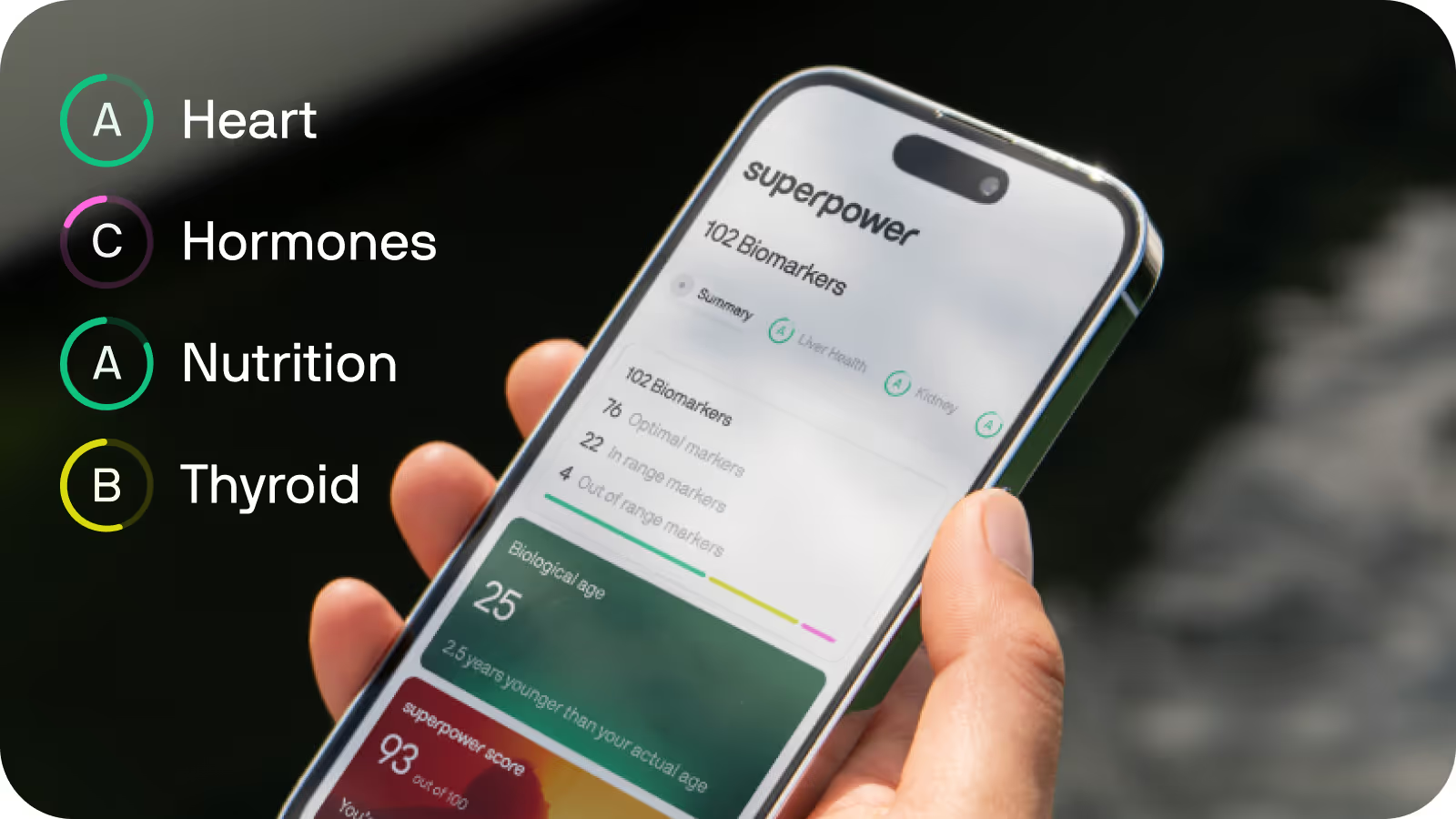
A smartphone displays health app results, showing biomarker summary, superpower score, and biological age details.
What could cost you $15,000 is $199

Superpower
Membership

Your membership includes one comprehensive blood draw each year, covering 100+ biomarkers in a single collection
One appointment, one draw for your annual panel.
100+ labs tested per year
A personalized plan that evolves with you
Get your biological age and track your health over a lifetime
$
17
/month
billed annually
Pricing for members in NY & NJ is $499
Flexible payment options
Four credit card logos: HSA/FSA Eligible, American Express, Visa, and Mastercard.
Start testing
Cancel anytime
HSA/FSA eligible
Results in a week

Finally, healthcare that looks at the whole you