Excellent 4.6 out of 5
Sex Hormones

Blood Testing for Testosterone, Free

Free testosterone is the small portion of the hormone testosterone that circulates in blood without being attached to carrier proteins. Testosterone is produced mainly in the testes and, in smaller amounts, in the ovaries and adrenal glands. Most of it travels bound to sex hormone-binding globulin and albumin; only a small fraction is unbound. At home blood testing is available in select states. See FAQs below

Book A Testosterone, Free Blood Test
Cancel anytime
HSA/FSA eligible
Results in a week
Physician reviewed

Every result is checked

·
CLIA-certified labs

Federal standard for testing

·
HIPAA compliant

Your data is 100% secure

Key Benefits

  • Know your active testosterone level driving libido, muscle, mood, and metabolism.
  • Spot hidden imbalance when total testosterone looks normal but SHBG is abnormal.
  • Clarify causes of low energy, low sex drive, erectile issues, or bone loss in men.
  • Flag androgen excess in women with acne, unwanted hair, hair thinning, or PCOS signs.
  • Guide testosterone therapy dosing and safety, avoiding under-treatment or supraphysiologic levels.
  • Protect fertility by identifying hormonal patterns affecting sperm production or ovulation.
  • Track trends as weight, thyroid, liver, or medications shift free testosterone.
  • Best interpreted with total testosterone, SHBG, and your symptoms for accurate context.

What is a Testosterone, Free blood test?

Free testosterone is the small portion of the hormone testosterone that circulates in blood without being attached to carrier proteins. Testosterone is produced mainly in the testes and, in smaller amounts, in the ovaries and adrenal glands. Most of it travels bound to sex hormone-binding globulin and albumin; only a small fraction is unbound. A free testosterone blood test estimates that unbound portion (free, non-protein-bound testosterone), the part that can move into tissues.

Free testosterone matters because it represents the hormone that is immediately available to act on cells. It crosses into cells, binds the androgen receptor, and turns on gene programs that support sexual function and libido, maintain muscle and bone, stimulate red blood cell production, and influence mood and energy (androgen effects). In all sexes, it helps coordinate body composition, bone strength, and reproductive health. Because it reflects the 'usable' pool rather than the total carried in the bloodstream, free testosterone offers a direct view of potential androgen activity.

Why is a Testosterone, Free blood test important?

Free testosterone is the small fraction not bound to carrier proteins; it enters cells and drives androgen signaling. It supports muscle and bone, red blood cell production, libido and fertility, mood and cognition, and metabolic balance.

Ranges differ by lab, age, and sex. Men’s values are about tenfold higher than women’s; children are low until puberty. In men, mid‑to‑upper age‑range values often feel within reference ranges; in women, lower‑to‑mid is typical. In pregnancy, SHBG rises, so free levels often stay near non‑pregnant values.

Low free testosterone reflects underactive hypothalamic‑pituitary‑gonadal signaling or relatively high SHBG. In men it brings low desire and erections, fatigue, depressed mood, less muscle, more fat, anemia, and bone loss. In women it can mean lower desire and arousal and reduced exercise capacity. In teens, sustained low values can delay puberty.

When high, androgen effects intensify. Men may develop acne, irritability, raised hematocrit, sleep apnea, prostate growth, and suppressed sperm production, especially with external androgens. In women, it often matches a polycystic ovary pattern—irregular cycles, hirsutism, acne, and insulin resistance—with fertility and cardiometabolic impact. In children, unexpectedly high values suggest early androgen exposure.

Big picture, free testosterone sits at the junction of brain‑pituitary signals and SHBG (shaped by liver, thyroid, insulin, and estrogens), linking to bone, muscle, mood, reproduction, and long‑term metabolic and cardiovascular risk.

What insights will I get?

The free testosterone blood test measures the small fraction of testosterone not bound to carrier proteins (mainly SHBG and albumin). This “bioactive” portion drives androgen signaling that supports energy production, muscle and bone maintenance, red blood cell formation, mood and cognition, sexual function, and aspects of metabolic and immune balance.

Low values usually reflect reduced testosterone production (testicular or ovarian/adrenal) or increased binding by SHBG, leaving too little freely available hormone. In men, this commonly shows up as lower morning energy, decreased libido and erectile quality, reduced muscle mass/strength, anemia, lower bone density, and flatter mood. In women, low free testosterone can relate to diminished sexual desire, fatigue, and lower lean mass; age and menopause lower levels naturally.

Being in range suggests adequate androgen signaling for stable body composition, libido and reproductive capacity, sustained hematopoiesis, and cognitive and metabolic resilience. When age- and sex-specific reference ranges are used, most people feel and function well across the mid portion of the range; there is no strong consensus that “optimal” sits at one extreme.

High values usually reflect increased production (endogenous or androgen exposure) or low SHBG, raising the free fraction. In men, this may present with acne/oily skin, irritability, and increased red cell mass. In women, high free testosterone often drives hirsutism, acne, scalp hair thinning, menstrual irregularity, and insulin resistance, as seen in polycystic ovary physiology.

Notes: Levels vary with age, time of day (highest in the morning), illness, and SHBG shifts (raised by estrogens, hyperthyroidism, liver disease; lowered by obesity/insulin resistance, hypothyroidism, and androgens). Pregnancy increases SHBG and total testosterone, altering free estimates. Assay method matters; equilibrium dialysis or calculated free testosterone is more reliable than direct analog immunoassays.


Superpower also tests for

See more blood diseases

Frequently Asked Questions About

What is free testosterone, and why does it matter?

Free testosterone is the small portion of testosterone in the blood that is not bound to proteins and is biologically active—meaning the body can use it immediately for crucial functions like muscle growth, bone health, and sexual wellness. Only about 2–3% of total testosterone is free, but it has a powerful impact on energy, mood, libido, and overall vitality in both men and women.

How is free testosterone different from total testosterone?

Total testosterone refers to the sum of both protein-bound and unbound (free) testosterone in the bloodstream. Free testosterone, by contrast, is the unbound, "active" hormone that is available for the body to use, while most testosterone is bound to proteins like SHBG and albumin and not immediately usable.

Who should consider testing their free testosterone?

People who have symptoms of low testosterone but normal total testosterone, those experiencing symptoms suspicious for testosterone problems, or individuals monitoring hormone therapies may benefit from measuring free testosterone. This test is particularly helpful if a healthcare provider suspects issues related to protein binding or when evaluating causes of infertility, fatigue, depression, or sexual dysfunction in both men and women.

Are there differences in male and female testosterone testing and levels?

Yes, men naturally have much higher testosterone levels than women, and reference ranges for free testosterone differ between sexes. While the hormone is vital for both, women produce smaller amounts, and high or low free testosterone can affect each group differently—for example, causing PCOS in women or hypogonadism in men.

What can cause low free testosterone levels?

Low free testosterone may result from aging (especially in men), testicular or ovarian dysfunction, pituitary disorders, chronic illness, increased SHBG levels, or certain medications. Symptoms often include decreased sex drive, low energy, difficulty building muscle, and mood changes.

What states are Superpower’s at-home blood testing available in?

Superpower currently offers at-home blood testing in the following states: Alabama, Arizona, California, Colorado, Connecticut, Delaware, District of Columbia, Florida, Georgia, Idaho, Illinois, Indiana, Kansas, Maine, Maryland, Massachusetts, Michigan, Minnesota, Missouri, Montana, Nebraska, Nevada, New Hampshire, New Jersey, New Mexico, New York, North Carolina, Ohio, Oklahoma, Oregon, Pennsylvania, South Carolina, Tennessee, Texas, Utah, Vermont, Virginia, Washington, West Virginia, and Wisconsin.

We’re actively expanding nationwide, with new states being added regularly. If your state isn’t listed yet, stay tuned.

How is free testosterone measured? At Superpower we test via blood-draw.

Free testosterone is measured through a blood test, typically performed in the morning when testosterone levels are highest. At Superpower, the test involves a standard blood draw, analyzed by accredited labs to determine the level of unbound, active testosterone in circulation.

Do I need to fast before a free testosterone blood test?

Fasting is usually not required for a free testosterone test, but it is important to follow any specific instructions provided with the test kit or by the laboratory. However, tests are often done in the morning because testosterone levels naturally fluctuate throughout the day and are highest early in the day.

How often should I test my free testosterone?

There is no universal rule, but individuals with symptoms or those being monitored for a hormone condition may need to retest every few months, as advised by a healthcare provider. Routine screening without symptoms is not typically necessary for most people.

What happens if my free testosterone is outside the optimal range?

If free testosterone is outside the healthy range, it can contribute to symptoms or signal an underlying condition requiring further investigation. Treatment options depend on the cause and may include lifestyle modification, managing unrelated health issues, or hormone therapy under the supervision of a healthcare professional.

How it works

1

Test your whole body

Get a comprehensive blood draw at one of our 3,000+ partner labs or from the comfort of your own home.

2

An Actionable Plan

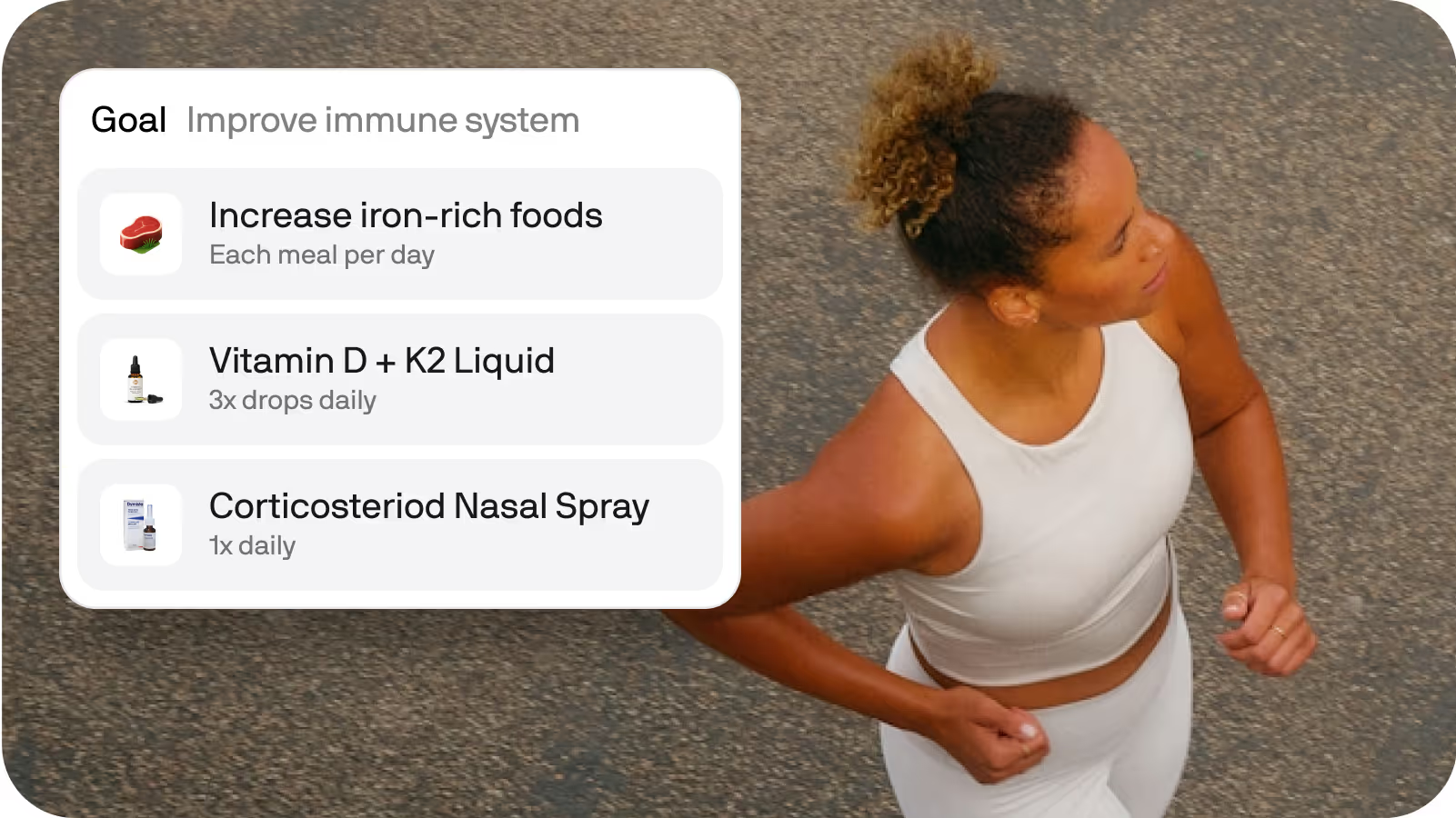
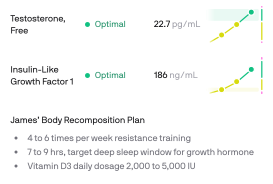
Easy to understand results & a clear action plan with tailored recommendations on diet, lifestyle changes, supplements and pharmaceuticals.

3

A Connected Ecosystem

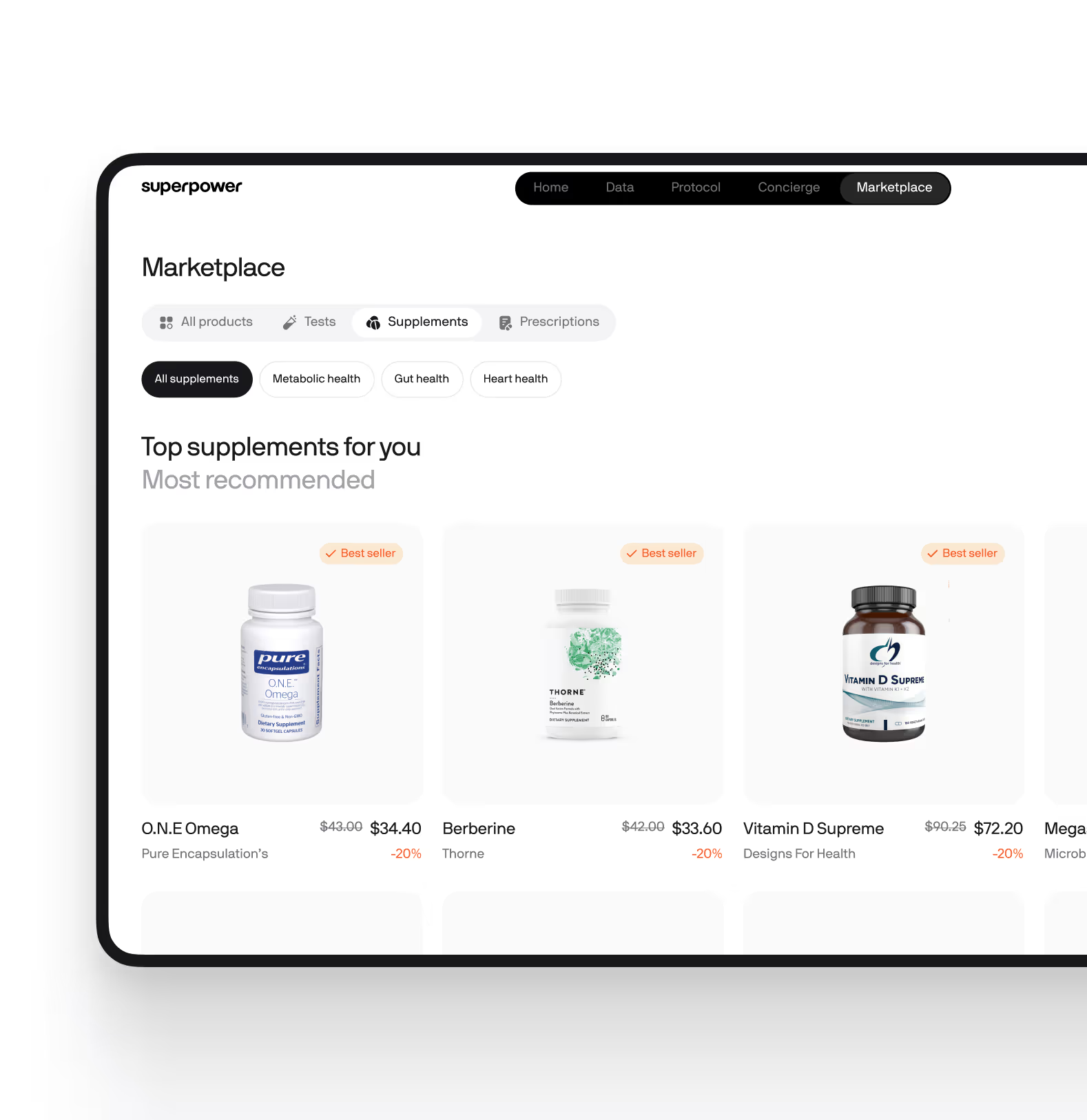
You can book additional diagnostics, buy curated supplements for 20% off & pharmaceuticals within your Superpower dashboard.

Superpower tests more than 
100+ biomarkers & common symptoms

Developed by world-class medical professionals

Supported by the world’s top longevity clinicians and MDs.

Dr Anant Vinjamoori

Superpower Chief Longevity Officer, Harvard MD & MBA

A smiling woman wearing a white coat and stethoscope poses for a portrait.

Dr Leigh Erin Connealy

Clinician & Founder of The Centre for New Medicine

Man in a black medical scrub top smiling at the camera.

Dr Abe Malkin

Founder & Medical Director of Concierge MD

Dr Robert Lufkin

UCLA Medical Professor, NYT Bestselling Author

membership

$17

/month
Billed annually at $199
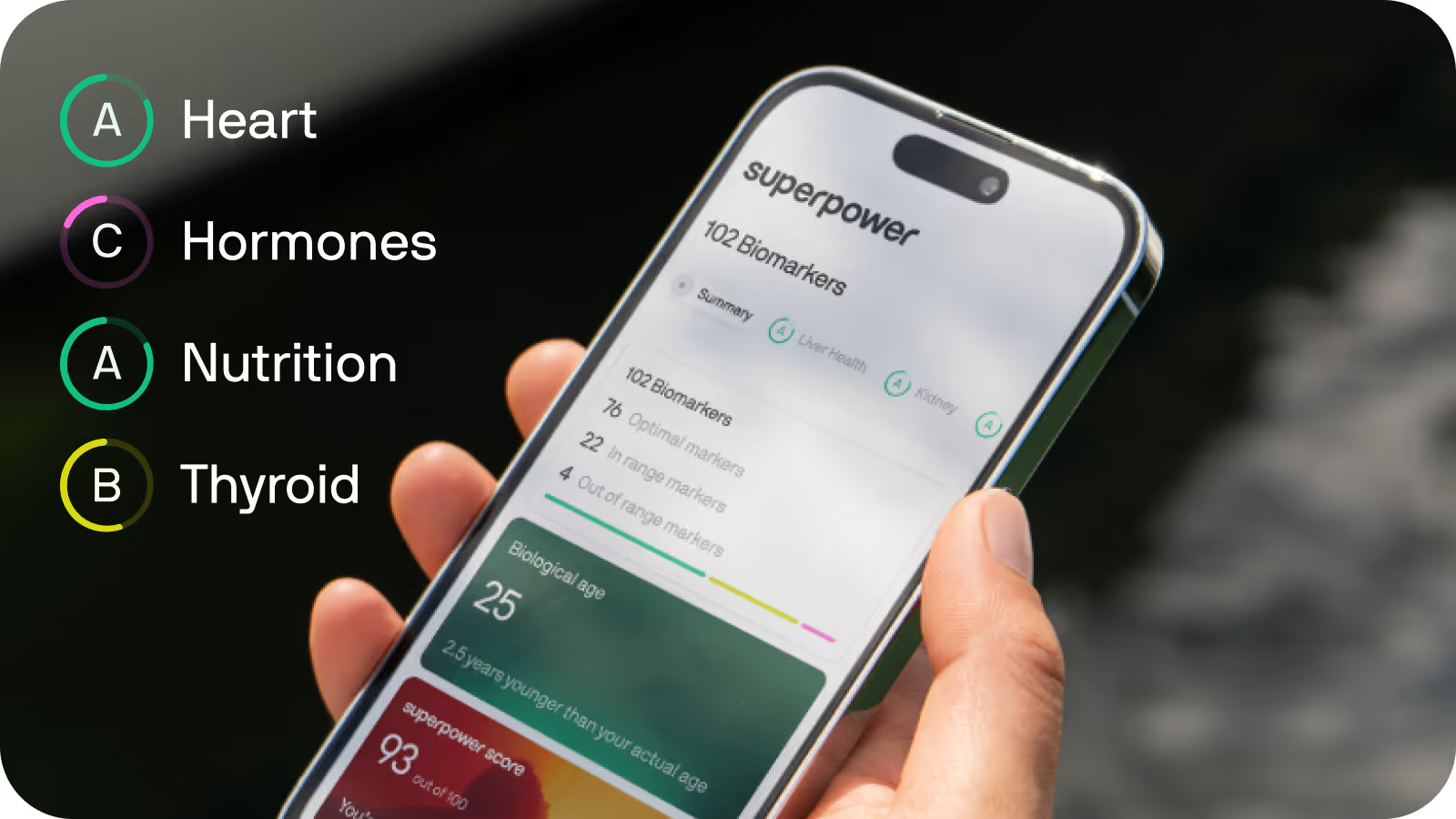
A smartphone displays health app results, showing biomarker summary, superpower score, and biological age details.
What could cost you $15,000 is $199

Superpower
Membership

Your membership includes one comprehensive blood draw each year, covering 100+ biomarkers in a single collection
One appointment, one draw for your annual panel.
100+ labs tested per year
A personalized plan that evolves with you
Get your biological age and track your health over a lifetime
$
17
/month
billed annually
Pricing for members in NY & NJ is $499
Flexible payment options
Four credit card logos: HSA/FSA Eligible, American Express, Visa, and Mastercard.
Start testing
Cancel anytime
HSA/FSA eligible
Results in a week

Finally, healthcare that looks at the whole you