Excellent 4.6 out of 5
Immune System

Blood Testing for Neutrophil-to-Lymphocyte Ratio

The neutrophil-to-lymphocyte ratio (NLR) is a simple calculation from a routine blood sample that compares two white blood cell populations. Neutrophils are rapid-response defenders made in the bone marrow that patrol the bloodstream and tissues for microbes and injury (innate immunity, granulocytes). At home blood testing is available in select states. See FAQs below

Book A Neutrophil-to-Lymphocyte Ratio Blood Test
Cancel anytime
HSA/FSA eligible
Results in a week
Physician reviewed

Every result is checked

·
CLIA-certified labs

Federal standard for testing

·
HIPAA compliant

Your data is 100% secure

Key Benefits

  • Understand immune balance at a glance by comparing neutrophils to lymphocytes.
  • Spot possible acute infection or stress; higher ratios often indicate systemic inflammation.
  • Clarify fevers or fatigue; higher ratios lean bacterial, lower may lean viral.
  • Guide urgency during illness; rising ratios can flag need for prompt clinical assessment.
  • Track recovery after infection, surgery, or flares; falling ratios suggest resolving inflammation.
  • Monitor chronic inflammatory conditions alongside CRP or ESR to explain symptom changes.
  • Best interpreted with a CBC differential, CRP, and your current symptoms.

What is a Neutrophil-to-Lymphocyte Ratio blood test?

The neutrophil-to-lymphocyte ratio (NLR) is a simple calculation from a routine blood sample that compares two white blood cell populations. Neutrophils are rapid-response defenders made in the bone marrow that patrol the bloodstream and tissues for microbes and injury (innate immunity, granulocytes). Lymphocytes are the more targeted coordinators of immune defense, including T cells, B cells, and natural killer cells (adaptive immunity). Because both cell types continuously circulate and are regulated by immune signals and stress hormones, their relative proportions in blood can be summarized as a ratio.

NLR captures the immune system’s balance between fast, non-specific inflammation and precise, regulated defense. It serves as a compact readout of whole-body immune activity and physiologic stress, integrating cues from infection, tissue damage, metabolic strain, and neuroendocrine signaling (cortisol, catecholamines). In this way, NLR functions as a broad index of systemic inflammation and immune tone, reflecting how strongly the innate arm is activated relative to the adaptive arm at a given moment.

Why is a Neutrophil-to-Lymphocyte Ratio blood test important?

The neutrophil-to-lymphocyte ratio (NLR) distills your immune system’s balance into a single number: neutrophils reflect fast, innate defense and physiologic stress, while lymphocytes reflect targeted, adaptive immunity. This ratio signals whole-body inflammation, stress hormone tone, and recovery capacity across the heart, vessels, metabolism, and brain.

In healthy adults, values often sit around 1–3, with many people falling toward the lower–middle part of that range. Children, especially early childhood, tend to run lower because lymphocytes predominate. Pregnancy naturally raises the ratio as neutrophils increase across trimesters.

When the ratio is low, it usually means more lymphocytes or fewer neutrophils. That pattern can appear with many viral infections, some autoimmune conditions, bone marrow suppression, and certain medications. People may notice swollen glands, sore throat, or recurrent infections if neutrophils are truly reduced. Systems-wise, first-line antibacterial defense may be weaker, while adaptive responses are prominent. In children this can be a normal developmental pattern.

When the ratio is high, it reflects neutrophil-driven inflammation and/or relative lymphocyte suppression, seen with acute bacterial infections, surgery or trauma, high cortisol states, smoking, obesity, and chronic inflammatory disease. Symptoms often include fever, pain, fatigue, and brain fog. Physiologically, this state tracks with endothelial activation, clotting tendency, and insulin resistance; older adults and pregnancy often show higher baselines.

Big picture: NLR links innate and adaptive immunity with the stress axis, vascular biology, and metabolism. Interpreted alongside the white count, CRP, ESR, and platelets—and trended over time—it helps contextualize current illness, recovery, and long-term risks such as cardiovascular events and adverse surgical or cancer outcomes.

What insights will I get?

The neutrophil‑to‑lymphocyte ratio (NLR) comes from a standard blood count differential. It compares innate “first responder” cells to adaptive immune cells. Because it tracks inflammatory and stress signaling, NLR reflects whole‑body inflammatory tone and immune balance with links to vascular, metabolic, recovery, and cancer outcomes.

Low values usually reflect relatively more lymphocytes or fewer neutrophils. This can mark a low inflammatory set‑point, recent viral exposure, or conditions that reduce neutrophils. In children, lower ratios are normal. When driven by true neutropenia, very low NLR can signal reduced bacterial defense and delayed wound response.

Being in range suggests balanced innate and adaptive immunity, steady cytokine signaling, and metabolic calm. In healthy nonpregnant adults, within reference ranges often sits in the lower‑to‑mid part of the reference range and aligns with favorable cardiometabolic and endothelial function.

High values usually reflect neutrophilia and/or relative lymphopenia from cortisol and sympathetic activation. Typical settings include acute bacterial infection, chronic inflammatory disease, and physiologic stress. Systemically, persistently high NLR indicates sustained inflammatory load, endothelial activation, and a more pro‑thrombotic, insulin‑resistant milieu, and is associated with higher cardiovascular and cancer risk in population studies.

Notes: Interpret with the absolute differential. Pregnancy and postpartum physiologically raise NLR; aging trends higher as well. Recent strenuous exercise, trauma, surgery, vaccination, or corticosteroids can transiently elevate it. Benign ethnic neutropenia can lower NLR. As a ratio, extremes may reflect one cell line rather than global immune imbalance.


Superpower also tests for

See more blood diseases

Frequently Asked Questions About

What is Neutrophil-to-Lymphocyte Ratio (NLR) testing?

NLR testing calculates the ratio of absolute neutrophils to absolute lymphocytes from a standard complete blood count with differential to reflect immune balance and inflammatory tone.

Why should I test my Neutrophil-to-Lymphocyte Ratio?

Testing NLR helps assess systemic inflammation, stress responses, and recovery, and it can surface early signals of infection or flares while enabling trend tracking over time.

How often should I test Neutrophil-to-Lymphocyte Ratio (NLR)?

Test as needed to establish a baseline and track trends—such as during illness, after recovery, or periodically during training blocks. Keep timing and conditions consistent for comparability.

What can affect my Neutrophil-to-Lymphocyte Ratio (NLR)?

Acute infections, intense exercise, surgery, trauma, dehydration, medications (especially corticosteroids), smoking, body composition, hormone shifts, and sleep quality can all influence NLR.

Are there any preparations needed before Neutrophil-to-Lymphocyte Ratio testing?

No special preparation is typically required. For consistent results, aim for a similar time of day and avoid unusual stressors or intense exercise immediately beforehand.

What states are Superpower’s at-home blood testing available in?

Superpower currently offers at-home blood testing in the following states: Alabama, Arizona, California, Colorado, Connecticut, Delaware, District of Columbia, Florida, Georgia, Idaho, Illinois, Indiana, Kansas, Maine, Maryland, Massachusetts, Michigan, Minnesota, Missouri, Montana, Nebraska, Nevada, New Hampshire, New Jersey, New Mexico, New York, North Carolina, Ohio, Oklahoma, Oregon, Pennsylvania, South Carolina, Tennessee, Texas, Utah, Vermont, Virginia, Washington, West Virginia, and Wisconsin.

We’re actively expanding nationwide, with new states being added regularly. If your state isn’t listed yet, stay tuned.

What happens if my Neutrophil-to-Lymphocyte Ratio is outside the optimal range?

Use context to interpret results—consider recent illness, exercise, medications, hydration, and related markers like high-sensitivity CRP. Track follow-up results to see if values normalize or remain elevated/suppressed.

Use context to interpret results—consider recent illness, exercise, medications, hydration, and related markers like high-sensitivity CRP. Track follow-up results to see if values normalize or remain elevated/suppressed.

Use context to interpret results—consider recent illness, exercise, medications, hydration, and related markers like high-sensitivity CRP. Track follow-up results to see if values normalize or remain elevated/suppressed.

How do I interpret my Neutrophil-to-Lymphocyte Ratio (NLR) results?

Look at both neutrophil and lymphocyte counts, recent stressors, and trends over time. Integrating NLR with other biomarkers helps clarify whether a change reflects acute stress or a persistent pattern.

Look at both neutrophil and lymphocyte counts, recent stressors, and trends over time. Integrating NLR with other biomarkers helps clarify whether a change reflects acute stress or a persistent pattern.

Look at both neutrophil and lymphocyte counts, recent stressors, and trends over time. Integrating NLR with other biomarkers helps clarify whether a change reflects acute stress or a persistent pattern.

How it works

1

Test your whole body

Get a comprehensive blood draw at one of our 3,000+ partner labs or from the comfort of your own home.

2

An Actionable Plan

Easy to understand results & a clear action plan with tailored recommendations on diet, lifestyle changes, supplements and pharmaceuticals.

3

A Connected Ecosystem

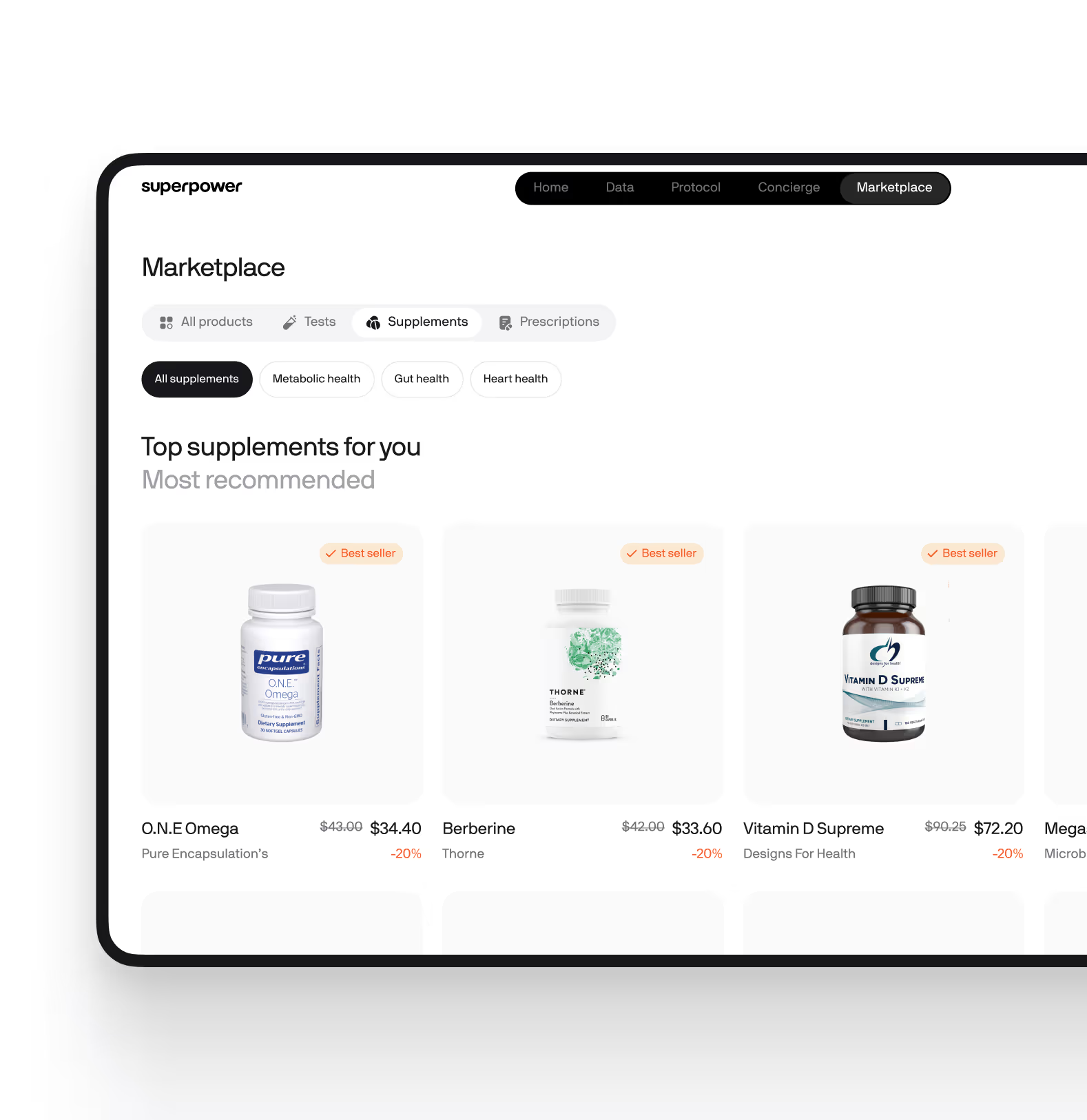
You can book additional diagnostics, buy curated supplements for 20% off & pharmaceuticals within your Superpower dashboard.

Superpower tests more than 
100+ biomarkers & common symptoms

Developed by world-class medical professionals

Supported by the world’s top longevity clinicians and MDs.

Dr Anant Vinjamoori

Superpower Chief Longevity Officer, Harvard MD & MBA

A smiling woman wearing a white coat and stethoscope poses for a portrait.

Dr Leigh Erin Connealy

Clinician & Founder of The Centre for New Medicine

Man in a black medical scrub top smiling at the camera.

Dr Abe Malkin

Founder & Medical Director of Concierge MD

Dr Robert Lufkin

UCLA Medical Professor, NYT Bestselling Author

membership

$17

/month
Billed annually at $199
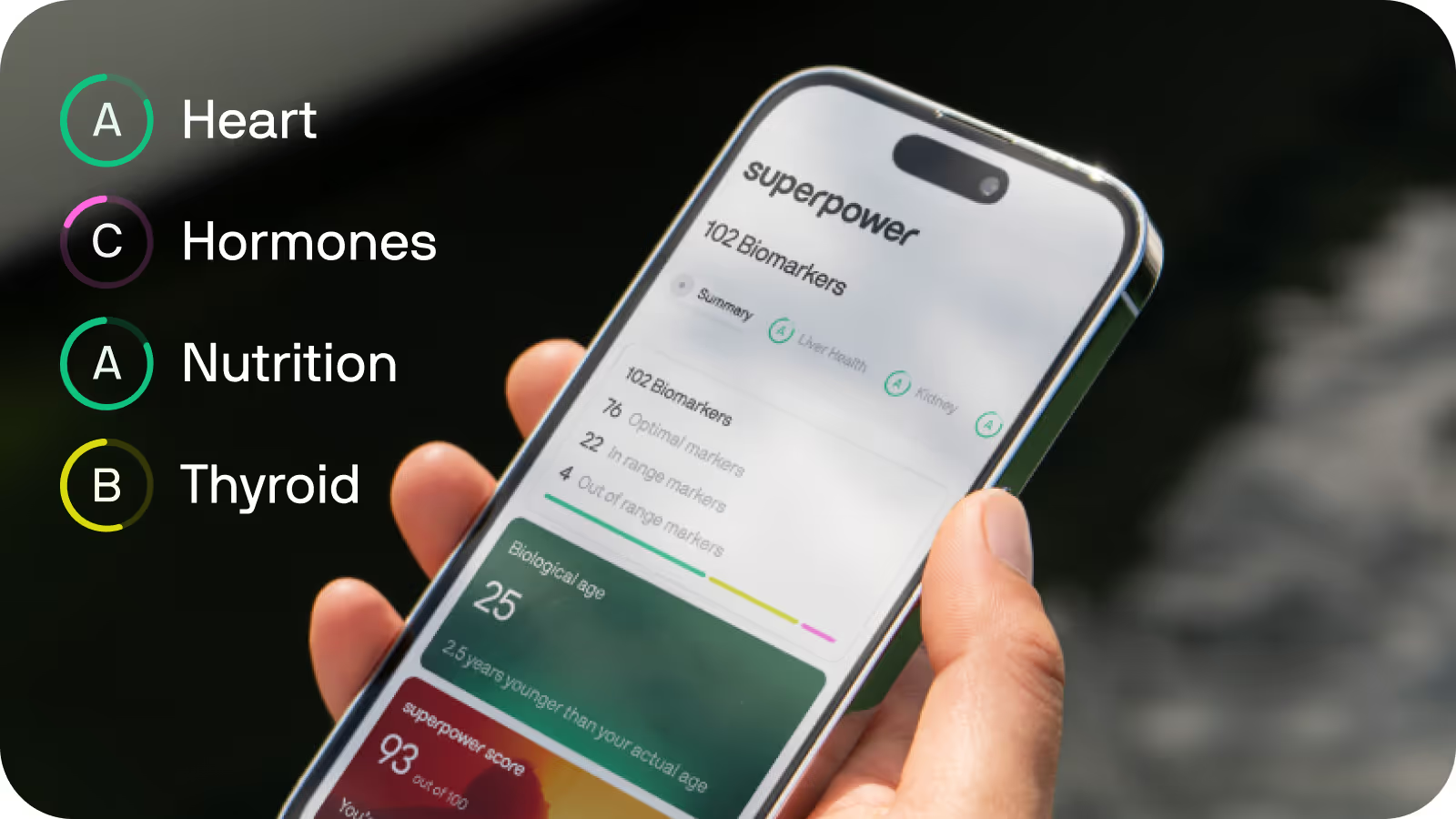
A smartphone displays health app results, showing biomarker summary, superpower score, and biological age details.
What could cost you $15,000 is $199

Superpower
Membership

Your membership includes one comprehensive blood draw each year, covering 100+ biomarkers in a single collection
One appointment, one draw for your annual panel.
100+ labs tested per year
A personalized plan that evolves with you
Get your biological age and track your health over a lifetime
$
17
/month
billed annually
Pricing for members in NY & NJ is $499
Flexible payment options
Four credit card logos: HSA/FSA Eligible, American Express, Visa, and Mastercard.
Start testing
Cancel anytime
HSA/FSA eligible
Results in a week

Finally, healthcare that looks at the whole you